New York Just Gave the Big AI Labs a Deadline
New York opened its AI registration portal this week. From January 1, 2027, frontier labs like OpenAI and Anthropic must register, publish safety frameworks, and report critical incidents within 72 hours.
- Published
- 11 Nov 2026
- Written by
- Md Tayobur Rahman
- Topic
- Tech News
- Reading time
- 3 min
Article
For years, "AI safety" was a slide in a funding deck. This week it became a filing deadline. New York opened a registration portal for large frontier AI developers on Tuesday, and companies like OpenAI and Anthropic have until January 1, 2027 to sign up — or face enforcement action from the state.
What the RAISE Act actually requires
The law applies to "large frontier developers," which New York defines as companies pulling in more than $500 million in annual revenue. If you clear that bar, three things become mandatory. You publish your safety framework on your own website. You report critical safety incidents within 72 hours. And you issue public transparency reports about your models.
That last one is the part I find most interesting as an engineer. Transparency reports are not marketing pages. They force a company to write down what its model can and cannot do, in public, on a schedule. Once that exists, every future claim can be measured against it.
The enforcement arm has teeth
New York is not handing this to an existing agency and hoping for the best. It created a new office — the Office of Digital Innovation, Governance, Integrity, and Trust, or DIGIT — to run the program. Fines start at $1 million for a single violation and climb to $3 million for repeat offenses. The state can also pursue companies that simply never register.
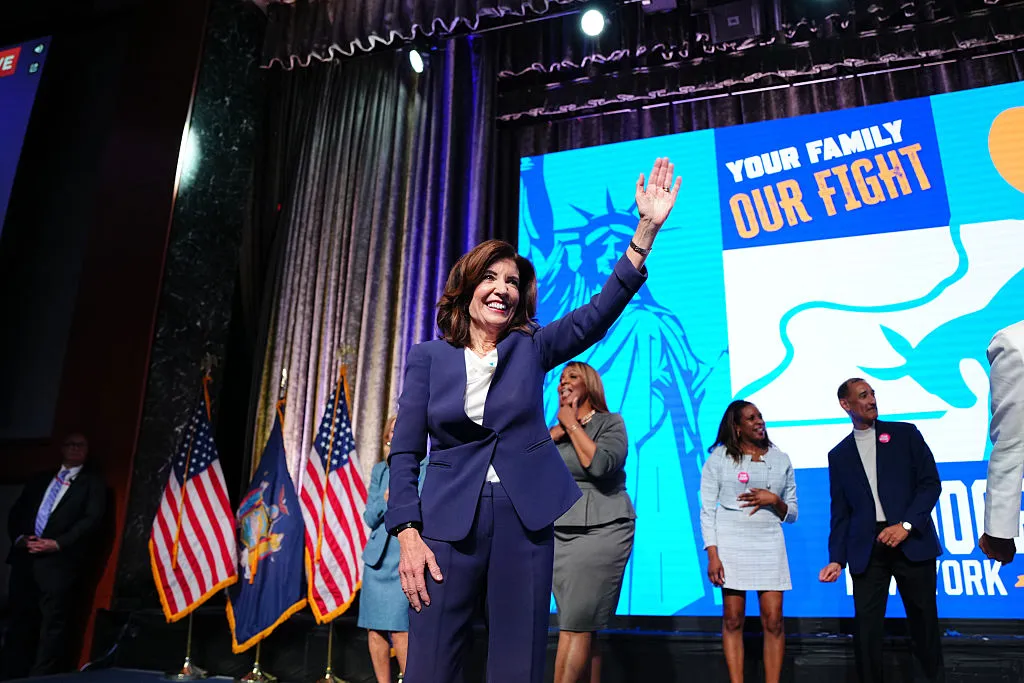
On the same day, Governor Kathy Hochul launched the New York Center for AI Responsibility and Research at Binghamton University, backed by $55 million in donations and capital announced back in January. The center will independently evaluate the safety and security of advanced systems and help DIGIT review the frameworks companies submit. In other words: someone other than the vendor gets to check the homework.
Hochul was blunt about the industry's posture, saying tech moguls describe their AI vision as inevitable and that "any collateral damage is worth it as long as we win the race to the AI cliff," according to TechCrunch.
New York is not doing this alone
The RAISE Act lands on top of two other New York laws. One already requires AI companion apps to remind users they are talking to a bot and to make reasonable efforts to detect suicidal ideation. Another, signed in October, targets minors: it restricts deceptive human-like interactions, emotionally manipulative or sycophantic responses, and any encouragement of self-harm or disordered eating. That one takes effect June 1, 2027.
Other states are converging on the same shape. California's SB 53, live since January, requires published safety frameworks, whistleblower protections, and incident reporting within 15 days. Illinois' SB 315 starts in 2027 and adds independent compliance audits on top.
What this means if you build with these models
If you are shipping a product on top of a frontier model, the compliance surface just got wider — and it is fragmented by state. A 72-hour incident window in New York and a 15-day window in California is not a rounding error; it changes how you instrument logging, escalation, and on-call rotations. Teams that already treat model failures as production incidents will barely notice. Teams that treat them as vendor problems will scramble.
The takeaway: regulation rarely arrives as a dramatic ban. It arrives as paperwork with a deadline and a price tag. January 1, 2027 is now a date on the calendar for the biggest AI labs in the world — and a signal that "trust us" is no longer an acceptable safety framework.
Share
Contact
Available for Laravel platforms, native Android apps, and the systems that run behind them.