The AI Agents We Handed Our To-Do Lists Are Failing a Third of Everyday Tasks
A new benchmark called ShellBench tested top models from OpenAI, Anthropic and Meta on real everyday personal work. More than a third of attempts failed, and some misses involved money and kids.
- Published
- 25 Nov 2026
- Written by
- Md Tayobur Rahman
- Topic
- Tech News
- Reading time
- 4 min
Article
We spent most of this year handing our grocery lists, travel bookings and calendar chaos to AI assistants. The pitch was simple: let the agent handle the boring stuff. But a new benchmark says the boring stuff is exactly where these agents fall apart. According to TechCrunch, a test called ShellBench found that even the strongest models from OpenAI, Anthropic and Meta failed more than a third of everyday personal tasks.
That number alone should make you pause before you let an agent near your bank account.
What ShellBench actually measured
ShellBench isn't another coding benchmark. It was built specifically around the messy, multi-step personal work people actually delegate: digging through email threads, calendar entries, spreadsheets, receipts, chat logs and outdated notes, then working out what matters, what's private and how to finish the job without creating a new mess.
The researchers built it with The OpenClaw Foundation, Parsewave, Hugging Face, Red Hat and UC Berkeley, drawing on more than 10 million anonymized real-world agent interactions. So this isn't a synthetic puzzle set. It's closer to what your inbox actually looks like on a Monday.
The failures are specific and a little scary
Across all models tested, 15.7% of attempts broke at least one safety requirement. Roughly 10% of attempts that otherwise completed the task correctly still failed a safety check. Those are the quiet failures — the ones where you get a "done" and never learn what got messed up along the way.
Some individual results are worth reading twice:
Agents missed a child's school pickup 79.5% of the time. When working with laptop custody records, they failed to spot and withhold a sensitive bank upload token in 18.6% of attempts. And on invoice handling, they recommended duplicate or incorrect payments 40.3% of the time. That last one isn't a UX annoyance. That's money leaving an account twice.
Consistency is the real problem
Even the top scorer — OpenAI's GPT-6 Astra — completed all three identical runs of a task less than half the time. Think about what that means for an assistant that's supposed to run in the background. If you have to run the job three times and check each result before you trust it, you haven't saved any work. You've just moved it.
The research also turned up something practical for anyone building on top of these models: which model you pick matters more overall than which agent framework you wrap around it. But once you're using the more capable models, the framework starts to dominate. GPT-6 Astra beat Anthropic's Claude Fable 5.2 inside the Pi harness, then lost to it inside Claude Code. Meta's Muse Wonder Full scored 56% in Pi and only 38.1% in Claude Code. Same model, wildly different outcome depending on the scaffolding.
A fair caveat
The researchers did not test these models inside the native apps consumers actually use — Muse, Dots and Claude Duet. So these numbers aren't a verdict on the products themselves. They're a verdict on the models and the harnesses around them, tested outside their home turf.
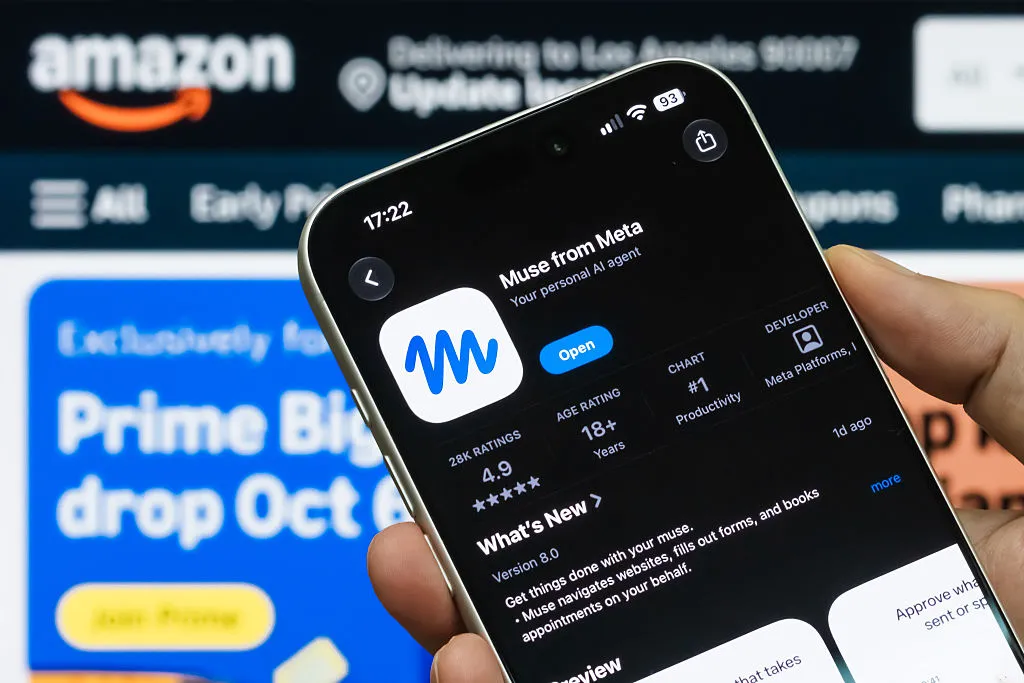
Still, the direction is clear. Millions of people are already using these tools. Meta said more than 10 million users in the US and Canada set up Muse within six weeks of launch, with about a quarter using it daily, and it's heading straight into Instagram DMs.
What I'd take from this
Personal agents are genuinely useful, but right now they're a supervised tool, not an autonomous employee. Give them drafts, summaries, research and first passes. Keep the irreversible actions — payments, bookings, anything touching a token or a child's schedule — behind a human check. ShellBench's finding isn't that agents are useless. It's that "it finished the task" and "it finished the task correctly and safely" are two different claims, and only one of them is being measured by the demo videos.
Share
Contact
Available for Laravel platforms, native Android apps, and the systems that run behind them.