The Data Center Boom Is Forcing the US Grid to Finally Grow Up
AI demand is straining an aging US power grid, but the same pressure is pulling superconducting lines, load orchestration, and demand flexibility off the shelf and into production.
- Published
- 28 Oct 2026
- Written by
- Md Tayobur Rahman
- Topic
- Tech News
- Reading time
- 4 min
Article
Every time you ask a chatbot a question, somewhere a server rack spins up and drinks a few more watts. Multiply that by millions of users and you get the story of 2026: AI has turned electricity demand in the US into a runaway line on the chart. The usual reaction is panic about an aging grid that was never built for this. But a panel of people who actually work on the problem says there is a second story hiding underneath the first — the demand is forcing the grid to finally modernize.
The grid is being stress-tested in public
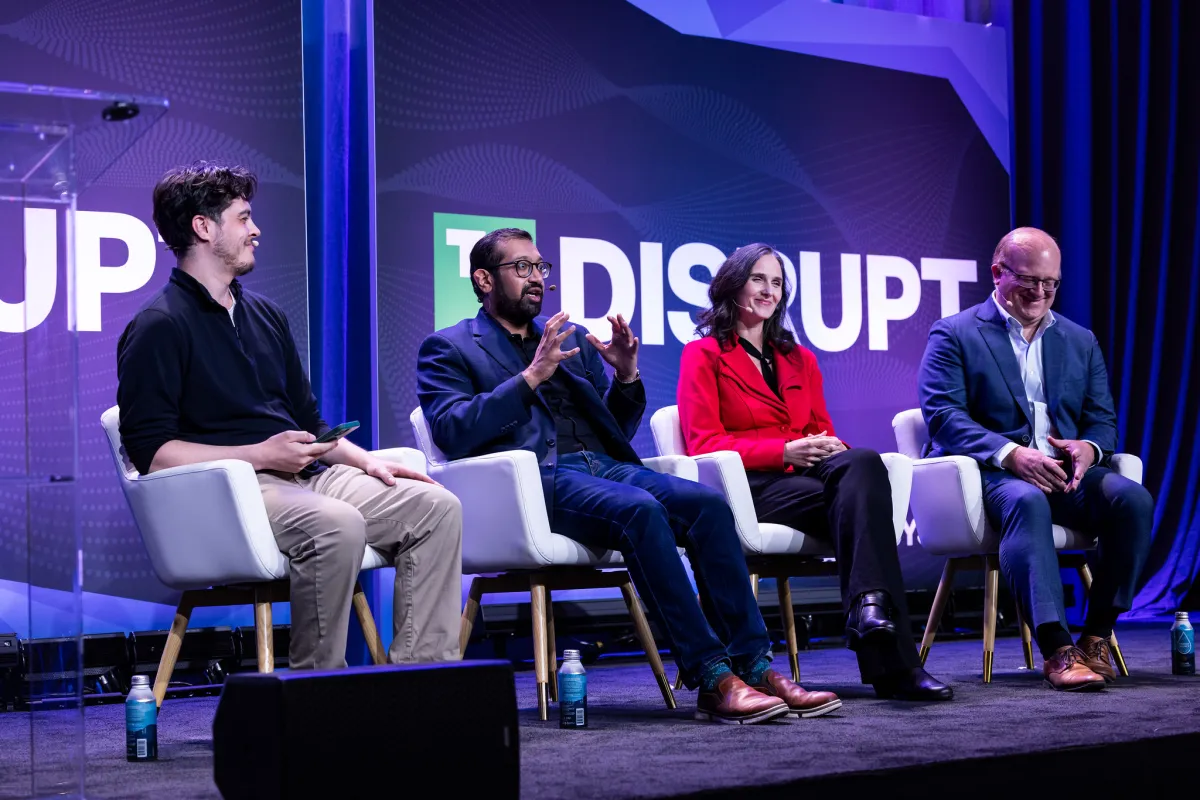
According to TechCrunch's coverage of TechCrunch Disrupt this month, the AI buildout has caused what amounts to a live stress test on American grid infrastructure. The short-term worry is money: bigger bills for ordinary households as utilities scramble to connect huge new loads. The long-term worry is reliability, because a system already running close to its limits does not have much room left for surprises.
Three people on that panel pushed back on the doom framing. Apoorv Bhargava, founder and CEO of WeaveGrid; Tim Heidel, CEO of Veir; and Kristin Eberhard, VP of policy at Rewiring America, all argued that the crunch is also creating room for tools and hardware that would otherwise have stayed on the shelf.
It's not just more power, it's more variables
Bhargava's point is that the grid is no longer the simple one-way pipe our parents grew up with. You now have intermittent renewables on the supply side, and on the demand side you have EVs, heat pumps, and data centers all pulling at once. The hard problem for utilities has shifted from "generate enough" to "orchestrate everything in real time."
That's exactly the gap WeaveGrid is selling into. Its software helps utilities schedule and shape load so the same physical infrastructure can serve more customers without collapsing, and ideally without pushing bills up. Instead of only building, you get better at steering.
Superconducting lines and a $110M bet
Veir takes the hardware route. The company sells superconducting power lines that it says can carry electricity roughly five times farther than conventional cables while taking up about twenty times less space. Earlier this month it closed a $110 million Series C — a number that tells you investors believe transmission, not just generation, is where the bottleneck sits.
Heidel's framing is that the sheer scale of AI infrastructure spending is pulling technologies into production far faster than the normal utility procurement cycle would allow. In his words, the pieces exist and can be combined so that a data center behaves like a good neighbor rather than a drain on the community. The catch, as he put it, is adopting them quickly enough to keep up with the next stage of growth.
The "yes-and" moment
Eberhard described the current period as an improv era — less either/or, more "yes, and." Yes, we need more transmission lines. Yes, we need more centralized generation. And yes, we should finally use the flexibility we left on the table for decades because there was never enough urgency to bother.
That last part is the interesting shift for anyone who builds software. Demand response, smart charging, load shifting — these were niche features for years. Suddenly they're core infrastructure, because the cheapest megawatt is the one you didn't have to build a power plant for.
What this means if you write code for a living
Two practical takeaways. First, energy is becoming a design constraint, not an afterthought. If your product runs inference at scale, where and when that compute runs now has a real cost curve attached. Second, the grid itself is turning into a software problem — orchestration, forecasting, and optimization — which means there's work for developers in an industry that used to be closed to them.
The uncomfortable part is timing. Grid projects are measured in years and AI demand is measured in quarters. The optimists on that panel are probably right that the pressure produces innovation. They'd also be the first to admit that right now the pressure is arriving faster than the fixes.
Share
Contact
Available for Laravel platforms, native Android apps, and the systems that run behind them.