Why AI-Generated Restaurant Menus Look So… Off (And It’s Not Just You)
That too-perfect, oddly smooth menu at your local cafe isn’t your imagination. Here’s the real reason AI-generated food images feel so wrong — and why it matters beyond the dinner table.
- Published
- 04 Sep 2026
- Written by
- Md Tayobur Rahman
- Topic
- Tech News
- Reading time
- 3 min
Article
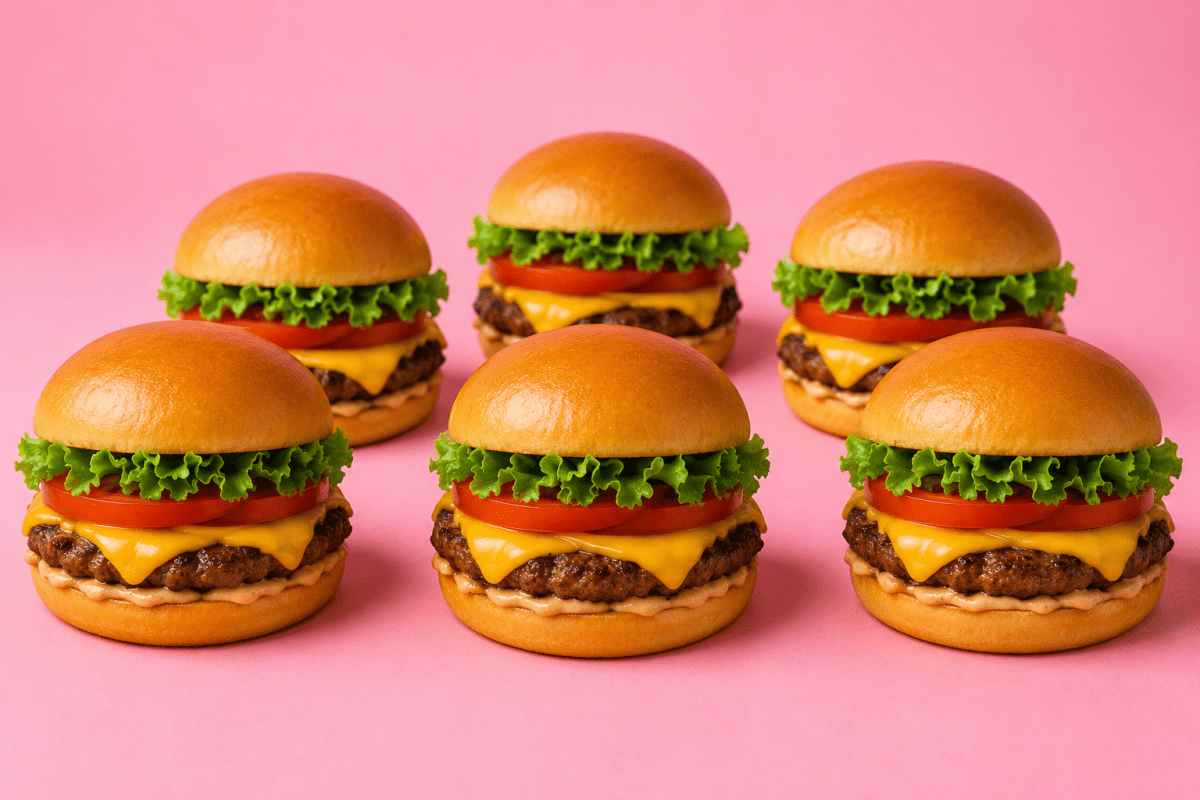
Ever walked into a cafe, glanced at the menu, and felt a little uneasy without knowing why? The bagel sandwich looks a touch too flawless, the lettuce is impossibly crisp, and the cheese has that glossy, too-perfect glow. You're not paranoid. There's a genuine, technical reason those menus feel wrong — and it's spreading fast across the restaurant business.
The telltale signs of a machine-made menu
You might catch it in the tiny details: a burrito with cheese so bubbly and melty it reads more like modern art than lunch, or an ice cream scoop that's a perfect sphere no human hand could produce. Most of the time, though, the images look ordinary enough that you only notice something's off when you look closer. That visceral "hmm" reaction is exactly the point. As Reality Defender CTO Alex Lisle put it to TechCrunch, "It's almost like an alien trying to make a pizza without understanding its core principles."
Why every AI menu looks the same
The reason comes down to how these models learn. Large language models and diffusion models — the engines behind tools like ChatGPT and Midjourney — are trained on enormous datasets, then spot patterns to predict what you want when you type "make me a menu for a burger restaurant." The problem is that those patterns keep pulling from the same narrow sources. Lisle joked that a lot of this output "looks like a Chili's menu from 2015," because that's essentially the corpus the models learned from.
Convergence is not (quite) model collapse
Ask an AI to design a fast-food menu and it'll likely reference Wendy's, Burger King, or McDonald's — chains whose menus already share a near-identical style. The AI mirrors that style, and if the generated menu ends up back in the training data, it reinforces the sameness even further. Lisle calls this convergence, which he distinguishes from the more extreme model collapse — the "mad cow disease" scenario where a model inbreeds on its own output until it breaks. Convergence is milder, but it still shaves the character off everything it touches. Lee Rainie of Elon University told TechCrunch that datasets get optimized "for pleasingness, or not being offensive," and that pressure "turns into homogenization."
There's actual science behind the ick
Your discomfort isn't just a vibe. Researchers at Germany's University of Duisburg-Essen found that AI-generated food images trigger an "uncanny valley" effect — the closer they get to real, the more unease they provoke. It only gets worse in a cultural moment where people are already on edge about what's real online. That's probably reason enough for restaurants to think twice before hitting "generate."
But the bigger takeaway has nothing to do with lunch. Lisle notes that for most of human history, "seeing and hearing has always been believing" — our court systems are literally built around videotaped evidence being the gold standard. When a cheeseburger photo can't be trusted at face value, the ripple effects reach far beyond the dinner table.
Share
Related
Contact
Available for Laravel platforms, native Android apps, and the systems that run behind them.